Why Crunches Won’t Fix Your Core
For decades we’ve been told that if we want a stronger core, we need more crunches, more planks, more Pilates — and then keep that core tight while walking the dog, sitting at work, or just standing in the kitchen. Talk about pressure!
But if you’ve been doing all of this and still struggle with back pain, pelvic pressure, leaks with exercise, or just that “weak core” feeling, you’re not alone. The truth is: your core is much more than your abs, and crunches only train a tiny piece of the system. But don’t fear! Your body has just been doing its best all this time - and we’re here to help so that you can feel even stronger!
Your Core Is a Team, Not Just Abs
Most people think core = six-pack. In reality, your core is more like a team of muscles working together to support your spine and pelvis.
This team includes:
Diaphragm (your breathing muscle)
Deep abdominal muscles (transversus abdominis)
Pelvic floor
Back stabilizers
Hips and glutes
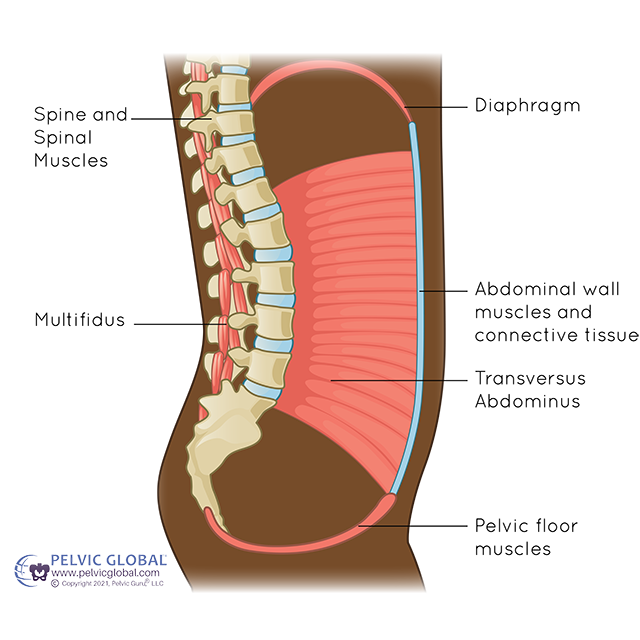
When they coordinate well, your core helps you:
Support your spine
Control force and pressure
Support bladder and bowel control
Breathe deeply
If the system isn’t working together, symptoms can appear in surprising ways. An unbalanced core can show up as hip or back pain, slow digestion, diastasis recti separation, painful sex, leakage, prolapse, and more. Many of our patients feel like their upper abs are tight, but the lower ones feel like it’s Thanksgiving everyday. It can be hard to coordinate all of those muscles!
Why Crunches Often Miss the Mark
Crunches mainly train the rectus abdominis — the superficial “six-pack.” Many core issues, though, come from coordination problems with deeper muscles, not a lack of crunch strength.
Too many crunches can even make symptoms worse by:
Increasing pressure on the pelvic floor
Reinforcing shallow, chest-only breathing
Ignoring deep stabilizing muscles
For people with pelvic floor symptoms, back pain, or postpartum recovery, the goal isn’t just stronger abs — it’s better teamwork among the muscles.
The Missing Pieces
A strong, functional core includes:
Breathing coordination: Diaphragm + pelvic floor working together. Think “exhale with exertion.” Be sure to inhale to expand and lengthen those core muscles first, and then breathe out to engage them with full length and power!
Deep ab activation: Stability over flashy moves. Some of the most important core exercises look incredibly simple. We always start by focusing on control, so that you can feel confident that you’re using the muscles that you intend to engage.
Hip and glute strength: Helps manage forces through pelvis and core. If the hips aren’t strong, wonky patterns can get set up at the core, causing pain and weakness.
Core Strength Should Support Your Life
A healthy core isn’t about looks - it’s about function. You should be able to:
Exercise without leaking
Move without pain
Lift without pressure
Sit and stand without hurting
If your core still feels weak, it’s likely coordination, not crunches, that’s the problem. It can feel confusing and complex. But our detective therapists can help get to the bottom of it so that you can feel your best!
How Pelvic Floor Therapy Helps
At Triad Pelvic Health, we evaluate the whole core system - breathing, abs, pelvic floor, hips, and movement patterns - and help restore strength, stability, and confidence in everyday life. We find the problem, fix the pattern, and give you plenty of corrective exercise and homework for long term relief!
Takeaway: Crunches target one muscle. Your core is a team. When the team works together, you get the core strength that actually matters: stability, comfort, and confidence.
Got questions? We’re here to help! Give us a call to talk with one of our knowledgeable and friendly patient care coordination or schedule a free consultation appointment here. (336) 443-0202